
Low Nitrogen Production in Cryogenic Nitrogen Plants: Causes and Troubleshooting
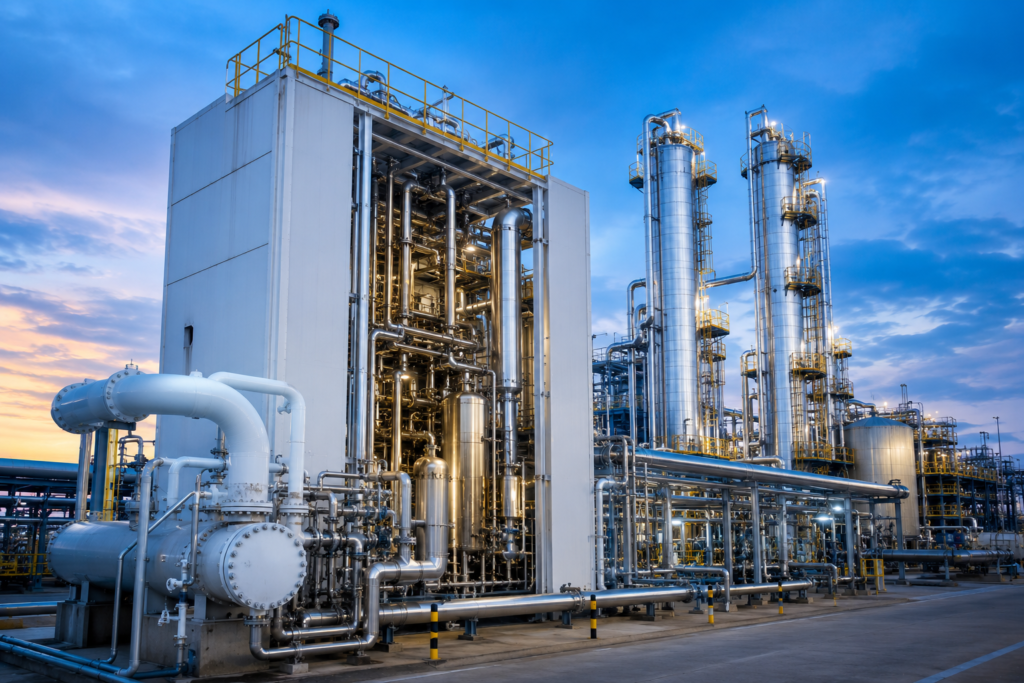
Low nitrogen production is one of the most common operational challenges encountered in cryogenic nitrogen plants. Operators often notice that the plant is unable to achieve its design capacity despite stable operation and acceptable product purity.
In many cases, production loss develops gradually over time and may go unnoticed until output falls significantly below expected levels. Because nitrogen production depends on the performance of multiple interconnected systems, identifying the true root cause requires a systematic troubleshooting approach.
This guide on Low Nitrogen Production in Cryogenic Nitrogen Plants provides a practical, symptom-based approach to identifying performance limitations and restoring plant capacity through systematic troubleshooting and root-cause analysis.
Why Nitrogen Production Falls Below Design Capacity
Nitrogen production is influenced by:
- Air compressor performance
- Air pretreatment system efficiency
- Heat exchanger effectiveness
- Refrigeration balance
- Distillation column performance
- Process stability
A problem in any of these areas can reduce overall plant capacity.
Understanding these interactions is essential when diagnosing Low Nitrogen Production in Cryogenic Nitrogen Plants and restoring stable plant performance.
Quick Engineering Summary
Low Nitrogen Production in Cryogenic Nitrogen Plants is usually the result of gradual performance degradation rather than sudden equipment failure. Production losses can originate from compressor limitations, air pretreatment deficiencies, heat exchanger problems, refrigeration imbalance, or distillation column instability.
Effective troubleshooting requires a systematic evaluation of production trends, pressure profiles, temperature distributions, and equipment performance. Plants that investigate abnormalities early and focus on root-cause identification typically restore capacity faster and achieve better long-term reliability.
Common Symptoms
Symptom 1: Stable Purity but Reduced Production
One of the most common situations is maintaining product purity while production gradually decreases.
Possible Causes
- Air flow restriction
- Heat exchanger performance degradation
- Increased pressure drop
- Compressor limitations
- Instrument inaccuracies
Typical Observations
- Product purity remains within specification
- Nitrogen flow decreases
- Compressor load increases
- Operators struggle to achieve design capacity
Investigation
One of the most common cases of Low Nitrogen Production in Cryogenic Nitrogen Plants is maintaining acceptable product purity while overall plant output gradually declines.
Check:
- Air compressor throughput
- Main heat exchanger pressure drop
- Air flow measurements
- Historical production trends
Symptom 2: Low Production with Purity Fluctuation
When production loss is accompanied by purity instability, the issue often extends beyond simple flow limitations.
Possible Causes
- Refrigeration deficiency
- Distillation column imbalance
- Reflux problems
- Process instability
- Moisture contamination
Typical Observations
- Variable purity readings
- Production fluctuations
- Increased operator intervention
- Changing column temperatures
Investigation
When investigating Low Nitrogen Production in Cryogenic Nitrogen Plants, production losses accompanied by purity instability usually indicate refrigeration or separation problems.
Review:
- Temperature profile
- Column operating conditions
- Expander performance
- Reflux control stability
Symptom 3: Increasing Compressor Power with Lower Production
Higher energy consumption combined with reduced output is a strong indication of declining plant efficiency.
Possible Causes
- Rising pressure drop
- Ice formation
- Heat exchanger contamination
- Air flow restrictions
Typical Observations
- Higher compressor discharge pressure
- Increased power consumption
- Reduced nitrogen output
- Lower operational efficiency
Investigation
Increasing energy consumption is frequently observed during Low Nitrogen Production in Cryogenic Nitrogen Plants because declining efficiency forces the compressor to work harder for lower output.
Evaluate:
- Heat exchanger pressure drop
- Compressor performance curves
- Air pretreatment effectiveness
- Temperature approach trends
Symptom 4: Production Loss After Plant Startup
Plants occasionally fail to reach expected production levels following startup.
Possible Causes
- Incomplete cooldown
- Incorrect operating parameters
- Insufficient refrigeration
- Distillation column instability
Typical Observations
- Slow capacity buildup
- Temperature profile deviations
- Unstable operating conditions
Investigation
Production limitations immediately after startup are another common scenario encountered in Low Nitrogen Production in Cryogenic Nitrogen Plants.
Verify:
- Cooldown completion
- Expander operating conditions
- Column pressure stability
- Process temperatures
Symptom 5: Gradual Production Decline Over Time
Gradual production loss is often overlooked because daily changes appear small.
Possible Causes
- Heat exchanger degradation
- Molecular sieve performance deterioration
- Compressor wear
- Instrument drift
- Process contamination
Typical Observations
- Production decreases over several weeks or months
- Rising power consumption
- Increased operational adjustments
Investigation
Compare current performance against historical baseline data.
Gradual deterioration is often the most difficult form of Low Nitrogen Production in Cryogenic Nitrogen Plants to identify because daily production losses appear insignificant.
Look for:
- Pressure-drop increases
- Temperature profile changes
- Compressor efficiency losses
- Dew point deterioration
Common Root Causes of Low Nitrogen Production
Most cases of Low Nitrogen Production in Cryogenic Nitrogen Plants originate from gradual degradation within the air pretreatment system, refrigeration cycle, heat exchanger, or distillation columns.
Heat Exchanger Performance Degradation
Reduced heat transfer efficiency limits refrigeration recovery and impacts separation performance.
Typical causes include:
- Moisture contamination
- Oil contamination
- Internal restrictions
- Fouling
Refrigeration Deficiency
The plant may not generate sufficient refrigeration to support design production.
Possible causes include:
- Expander inefficiency
- Reduced expander flow
- Process imbalance
- Excessive heat leak
Molecular Sieve Problems
Poor air pretreatment can affect the entire cold section.
Potential issues include:
- Incomplete regeneration
- Valve leakage
- Channeling
- Moisture breakthrough
Distillation Column Problems
Column performance directly affects production capacity.
Possible causes include:
- Reflux imbalance
- Pressure instability
- Internal flow disturbances
- Operational fluctuations
Root Cause Analysis Method
The following methodology provides a systematic framework for diagnosing Low Nitrogen Production in Cryogenic Nitrogen Plants.
Step 1: Confirm Actual Production Loss
Verify:
- Flow measurements
- Product demand
- Instrument accuracy
Do not assume production loss without confirming data accuracy.
Step 2: Review Historical Trends
Compare:
- Production rates
- Purity levels
- Power consumption
- Pressure profiles
Historical data often reveals gradual deterioration patterns.
Step 3: Evaluate Air Pretreatment
Check:
- Molecular sieve performance
- Regeneration temperatures
- Dew point trends
- Valve operation
Step 4: Assess Heat Exchanger Performance
Review:
- Pressure drop
- Temperature profile
- Cold-end approach temperatures
Step 5: Verify Refrigeration Balance
Evaluate:
- Expander performance
- Refrigeration generation
- Process stability
Step 6: Analyze Distillation Column Operation
Review:
- Pressure profile
- Temperature distribution
- Reflux conditions
- Product purity trends
Common Troubleshooting Mistakes
Successful troubleshooting of Low Nitrogen Production in Cryogenic Nitrogen Plants requires avoiding common diagnostic mistakes that delay root-cause identification.
Focusing Only on Visible Symptoms
Examples:
- Increasing compressor loading
- Adjusting reflux repeatedly
- Changing pressure setpoints
These actions may temporarily improve production but often fail to address the root cause.
Excessive Manual Intervention
Frequent process adjustments create additional instability and complicate troubleshooting efforts.
Cryogenic systems require time to respond and stabilize.
Ignoring Long-Term Trends
Many production problems develop gradually.
Trend analysis often reveals:
- Increasing pressure drop
- Declining refrigeration efficiency
- Progressive contamination
before major production losses occur.
Practical Engineering Insight
One of the most important lessons from investigating Low Nitrogen Production in Cryogenic Nitrogen Plants is that production loss itself is usually a symptom rather than the actual problem. Operators often attempt to increase compressor loading or adjust operating parameters without understanding why plant capacity has declined.
In many cases, the root cause lies in increasing pressure drop, deteriorating heat exchanger performance, moisture contamination, refrigeration deficiency, or process instability. Historical trend analysis frequently reveals developing problems weeks before production losses become operationally significant.
Successful plants treat production capacity as an important indicator of overall plant health rather than simply a performance target.
Best Practices for Maintaining Production Capacity
Long-term prevention of Low Nitrogen Production in Cryogenic Nitrogen Plants depends on continuous monitoring, contamination control, and disciplined operating practices.
Plants that consistently achieve design performance typically:
- Monitor production trends continuously
- Maintain excellent molecular sieve performance
- Control compressor oil carryover
- Track heat exchanger pressure drop
- Verify expander efficiency regularly
- Investigate abnormalities early
Engineering Perspective
From an engineering perspective, Low Nitrogen Production in Cryogenic Nitrogen Plants should be viewed as a plant-wide performance issue rather than an isolated equipment problem. Nitrogen production depends on the integrated performance of compressors, air pretreatment systems, heat exchangers, refrigeration systems, and distillation columns.
The most reliable plants maintain design production because they continuously monitor performance trends, investigate abnormalities early, and maintain strict contamination control. Small changes in temperature approach, pressure drop, dew point performance, or specific power consumption often provide early indications of developing production constraints.
As plants pursue higher efficiency and reliability, systematic troubleshooting of production losses becomes an essential component of operational excellence and long-term plant performance.
Related Engineering Guides

Engineering Basis
- International Society of Automation – Control loop behavior, analyzer interaction, and process stability
- Process Control Engineering – System dynamics and feedback interactions
- National Institute of Standards and Technology – Gas property behavior under varying temperature and pressure
Conclusion & Key Takeaways
Low Nitrogen Production in Cryogenic Nitrogen Plants rarely results from a single equipment failure. In most cases, production losses are the consequence of gradual performance degradation within the air pretreatment system, main heat exchanger, refrigeration cycle, distillation columns, or overall process stability.
Effective troubleshooting of Low Nitrogen Production in Cryogenic Nitrogen Plants requires a systematic approach that combines historical trend analysis, performance monitoring, and root-cause identification rather than simply reacting to visible symptoms. By investigating abnormalities early and maintaining disciplined operating practices, plant operators can restore production capacity, improve energy efficiency, and achieve higher long-term reliability and operational stability.
Key Takeaways
✅ Low Nitrogen Production in Cryogenic Nitrogen Plants usually develops gradually and often indicates underlying process degradation.
✅ Production losses can originate from compressors, heat exchangers, refrigeration systems, molecular sieves, or distillation columns.
✅ Stable purity does not necessarily indicate healthy plant operation.
✅ Increasing compressor power combined with lower production often indicates declining efficiency.
✅ Moisture contamination and increasing pressure drop can significantly reduce plant capacity.
✅ Historical trend analysis is one of the most effective tools for diagnosing production losses.
✅ Excessive manual intervention often complicates troubleshooting and delays root-cause identification.
✅ Maintaining molecular sieve reliability and heat exchanger performance is essential for sustaining production capacity.
✅ Early investigation of abnormalities reduces downtime and improves plant efficiency.
✅ A systematic troubleshooting approach improves reliability, restores production capacity, and supports long-term operational stability.
Optimize Production and Restore Plant Performance
Experiencing reduced nitrogen output, increasing compressor power consumption, or unexplained capacity limitations? These symptoms often indicate developing issues within the air pretreatment system, heat exchanger, refrigeration cycle, or distillation columns.
Access practical engineering resources and troubleshooting guides designed to help operators diagnose root causes, recover production capacity, and maintain reliable plant operation.