Cryogenic Nitrogen Plant Safety and Compliance Toolkit
Field-Ready Safety System for Commissioning, Startup, and Operations
A structured Cryogenic Nitrogen Plant Safety and Compliance Toolkit ensures that safety is engineered into the plant — not added later as a checklist.
👉 Before stability. Before optimization. Safety defines control.
✔ Prevent unsafe conditions
✔ Ensure interlock and ODH readiness
✔ Build audit-ready systems
✔ Enable controlled plant operation
Instant digital download.
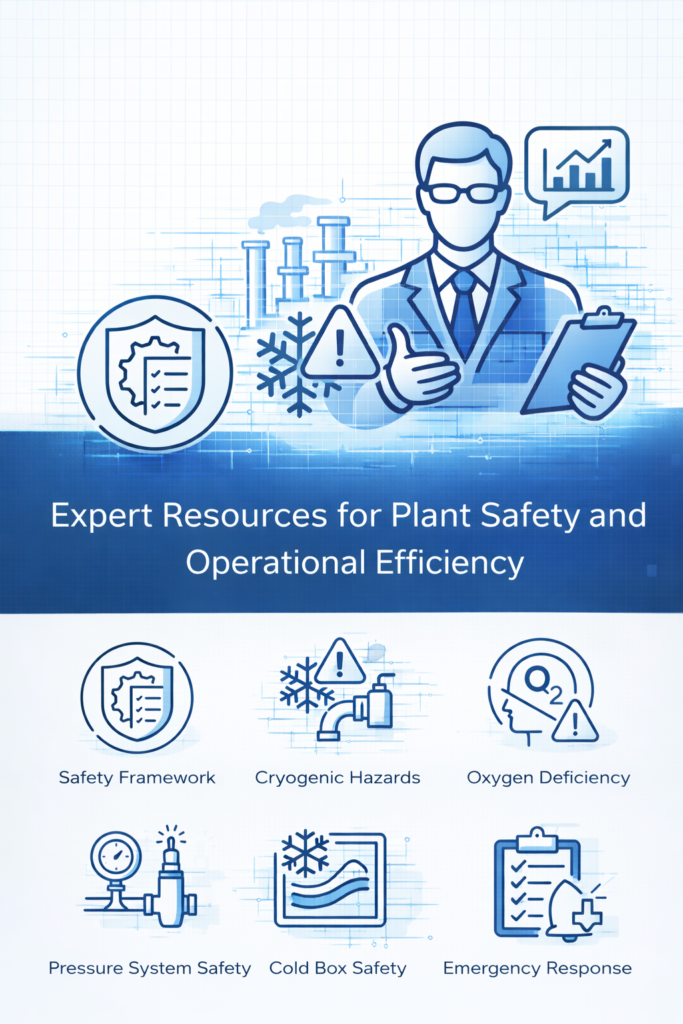
Where Safety Fits in Plant Engineering System
Safety is not a separate activity. It is the base layer of plant performance.
- Before commissioning → Safety validation
- Before stabilization → Risk control
- Before optimization → System integrity
👉 Without safety, stability cannot be sustained.
Why cryogenic nitrogen plant safety and Compliance matters
Cryogenic nitrogen plants operate under high-risk conditions:
• High-pressure systems
• Extremely low temperatures
• Oxygen-deficient environments
• Complex integrated processes
Most incidents occur due to:
• Lack of structured safety systems
• Skipping critical safety checks
• Poor operational discipline
• Ignoring early warning signs
👉 The Cryogenic Nitrogen Plant Safety and Compliance Toolkit provides a structured approach to eliminate these risks and ensure controlled operation.
Who this pack is for

Commissioning Engineers
Used during interlock verification, cause-and-effect checks, and pre-start safety reviews.

Plant safety
Officers
Supports documentation, traceability, and audit readiness without altering site procedures.

Operations Managers
Provides clarity during handover and ongoing operational documentation.

Industrial Consultants
Provide guidance to optimize plant performance, efficiency, and operational reliability.

EPC / OEM Support Teams
Useful during commissioning support, audits, and closure of technical deviations.

Maintenance Teams
Helps maintain consistent safety records during corrective actions and follow-ups.
👉 Most plant issues are not just process problems — they are safety failures in disguise.
What’s included in the Cryogenic Nitrogen Plant Safety and Compliance Pack
This Cryogenic Nitrogen Plant Safety and Compliance Toolkit includes 7 structured modules designed for real plant implementation.
Each document is designed to be:
Clear
Practical
Printable
Suitable for real plant environments

01. Safety Framework
Defines the overall structure for managing safety across the plant.
02. Cryogenic Hazards & Risk Control
Identifies cryogenic risks and outlines methods to control them.

03. Oxygen Deficiency Hazard (ODH) Management
Ensures safe monitoring and prevention of oxygen-deficient environments.
04. Pressure System Safety
Focuses on safe operation and protection of pressurized systems.
05. Cold Box Safety Practices
Covers safe handling and operation within cryogenic cold box areas.
06. Safety Checklists
Offers quick verification tools to ensure compliance and safe operations.
Structured Safety Approach
The Cryogenic Nitrogen Plant Safety and Compliance Toolkit follows a structured safety methodology:
- Identify hazards
- Apply control measures
- Verify system safety
- Monitor critical parameters
- Ensure compliance
- Maintain safe operation
What You Achieve
✔ Reduced instability due to unsafe conditions
✔ Fewer trips, alarms, and emergency shutdowns
✔ Stable commissioning and startup execution
✔ Reliable long-term plant operation
👉 Safety → Stability → Performance (show this chain)
Practical Safety and Compliance — Not Theory
Most safety systems are documentation-driven.
This toolkit is execution-driven.
✔ Engineering-based safety approach
✔ Real operational scenarios
✔ Step-by-step safety controls
✔ Actionable compliance checklists
With the Cryogenic Nitrogen Plant Safety and Compliance Toolkit, safety becomes a controlled and repeatable process.
👉 Built for real-world plant conditions
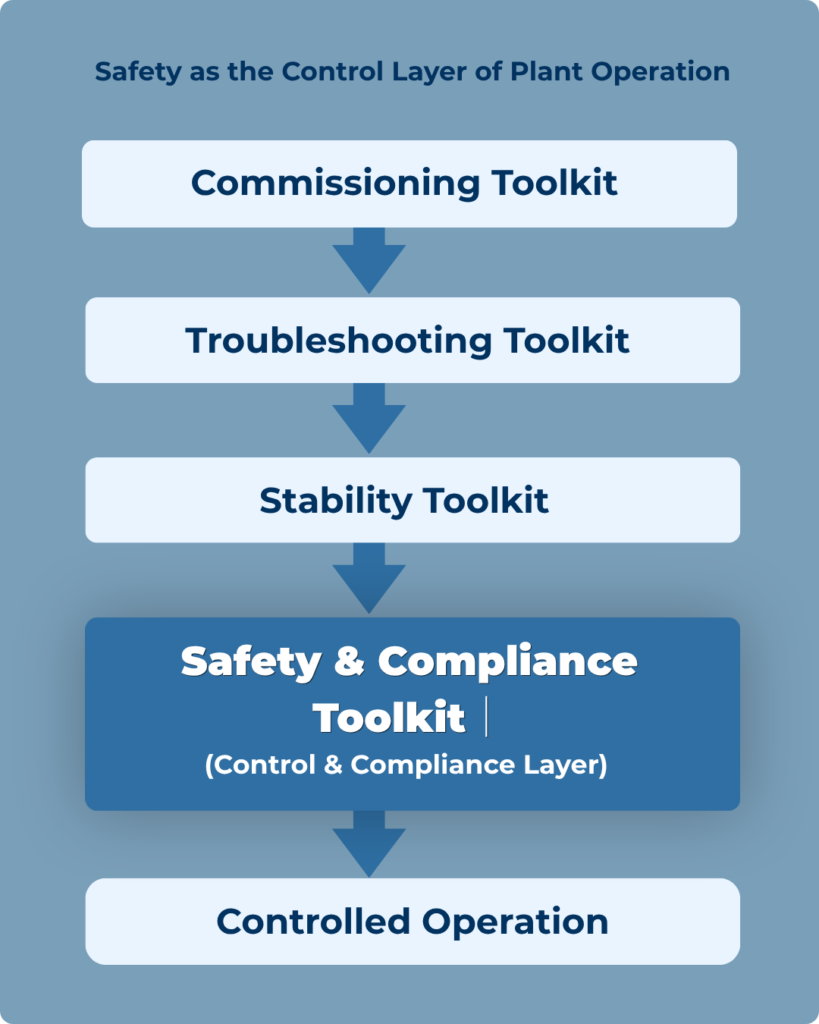
How the Safety & Compliance Toolkit Fits in the Complete Plant Performance System
The Cryogenic Nitrogen Plant Safety and Compliance Toolkit is not a standalone checklist.
It is an integral part of the cryogenic nitrogen plant engineering system — ensuring that plant operation remains controlled, compliant, and risk-free.
Commissioning builds the foundation.
Troubleshooting identifies and eliminates issues.
Stability controls process behaviour.
Safety ensures controlled and compliant operation.
👉 Together, they create a reliable, predictable, and safe plant environment.
Start with the Right Stage
If your plant is in startup phase → start with
👉 Commissioning Toolkit
If you are facing instability or trips → use
👉 Troubleshooting Toolkit
If operation is fluctuating → move to
👉 Stability Toolkit
To ensure safe and compliant operation → apply
👉 Safety & Compliance Toolkit
👉 Get the Safety & Compliance Pack
₹ 799
Instant Digital Download • Lifetime Free Updates
Used during commissioning, operations, or audits.
Optional Add-ons
✔ Remote consulting
✔ Document review
 Discount when purchased
with Commissioning /
Troubleshooting Pack
Available separately. Not
required to use the toolkit.
Want Startup + Troubleshooting Together?
✔ Commissioning Toolkit
✔ Troubleshooting Toolkit
✔ Safety & Compliance Toolkit
₹1,999
Why Safety Issues Are Often Misunderstood in Cryogenic Nitrogen Plants
Safety Problems in Cryogenic Nitrogen Plants
Safety problems in cryogenic nitrogen plants are rarely sudden.
They develop silently — through incomplete checks, bypassed interlocks, undocumented changes, or lack of system validation — and become visible only when a serious incident or operational disruption occurs.
👉 What appears as a safety incident is often the result of accumulated system gaps.
What You See vs What Actually Exists
Common safety concerns:
- Oxygen Deficiency Hazard (ODH) risks
- Improper handling of cryogenic liquids
- Incomplete interlock validation
- Missing or outdated safety procedures
- Unsafe startup or shutdown practices
👉 These are not isolated issues.
👉 They are indicators of system-level safety and compliance gaps.
Why Safety Gaps Persist
In many plants, safety is treated as:
- Documentation requirement
- Audit checklist activity
- One-time compliance exercise
👉 Instead of an integrated part of plant operation.
This leads to:
- Undetected safety risks
- Increased probability of incidents
- Operational disruptions
- Non-compliance during audits
What Actually Drives Safety Risks in Real Plants
In cryogenic nitrogen plants, safety risks originate from interconnected factors such as:
- Incomplete commissioning validation
- Improper interlock and alarm configuration
- Lack of standard operating procedures
- Inadequate training and awareness
- Deviations in process conditions
👉 A small safety gap in one area can escalate into a major operational risk.
Build Engineering Awareness Before Implementing Safety Systems
Before applying a structured safety and compliance system, it is essential to understand how risks develop across plant operations.
👉 These engineering learnings form the foundation for using a Cryogenic Nitrogen Plant Safety and Compliance Toolkit effectively in real plant conditions.
Recommended Engineering Insights
👉 Common Causes of Cryogenic Nitrogen Plant Trips
👉 Startup Instability in Cryogenic Nitrogen Plants
👉 Why Nitrogen Plant Energy Consumption Increases
Supporting Engineering Guides
👉 Cryogenic Nitrogen Plant Commissioning – Practical Engineering Guide
👉 Cryogenic Nitrogen Plant Operations – Complete Engineering Guide
👉 Molecular Sieve Systems in Cryogenic Nitrogen Plants
Apply Structured Safety Systems After Understanding
Once you understand how safety risks originate and propagate,
you can implement a structured approach using the:
👉 Cryogenic Nitrogen Plant Safety and Compliance Toolkit
This toolkit is designed as a practical cryogenic nitrogen plant safety and compliance toolkit for real plant environments — not just documentation.
What This Toolkit Helps You Achieve
✔ Identify and eliminate safety gaps
✔ Ensure interlock and system readiness
✔ Maintain compliance with operational standards
✔ Build a safe and controlled plant environment
👉 Safety is not a separate function.
👉 It is the foundation of stable and reliable plant operation.
Build Safety into Your Plant Operation
Safety is not a checklist — it is the foundation of reliable operation.
Ensure your plant is safe, compliant, and audit-ready.
👉 Identify and eliminate safety gaps
👉 Maintain controlled and compliant operation
Important note
This cryogenic nitrogen plant safety documentation provides general guidance and documentation structure only.
Always follow:
Site-specific safety procedures
OEM manuals
Statutory and regulatory requirements
Always follow applicable statutory requirements and recognized safety standards, such as guidance issued by relevant regulatory authorities.
Disclaimer
This publication is provided for educational training and general engineering reference purposes only.
It does not replace:
OEM manuals or design documentation
Plant-specific operating procedures (SOPs)
Qualified engineering judgment, supervision, or site safety regulations
All values, limits, sequences, and examples shown are typical reference practices and may vary by plant design, OEM, operating conditions, and regulatory requirements.
Users must verify all parameters, settings, and procedures with:
OEM manuals
Site-approved documentation
Applicable safety and regulatory standards
Procedural steps and troubleshooting methods described herein are illustrative and must be executed only by trained and authorized personnel following site safety rules.
The publisher and authors disclaim any liability for loss, damage, injury, or operational impact arising from the use, application, or interpretation of this material.
Unauthorized reproduction, resale, or public distribution of this content is strictly prohibited.