
Expander Instability in Cryogenic Nitrogen Plants — Causes and Control
Understand, diagnose, and control expander instability to maintain stable refrigeration and plant performance.
Expander instability directly affects refrigeration balance, leading to process fluctuations, purity issues, and unstable plant operation.
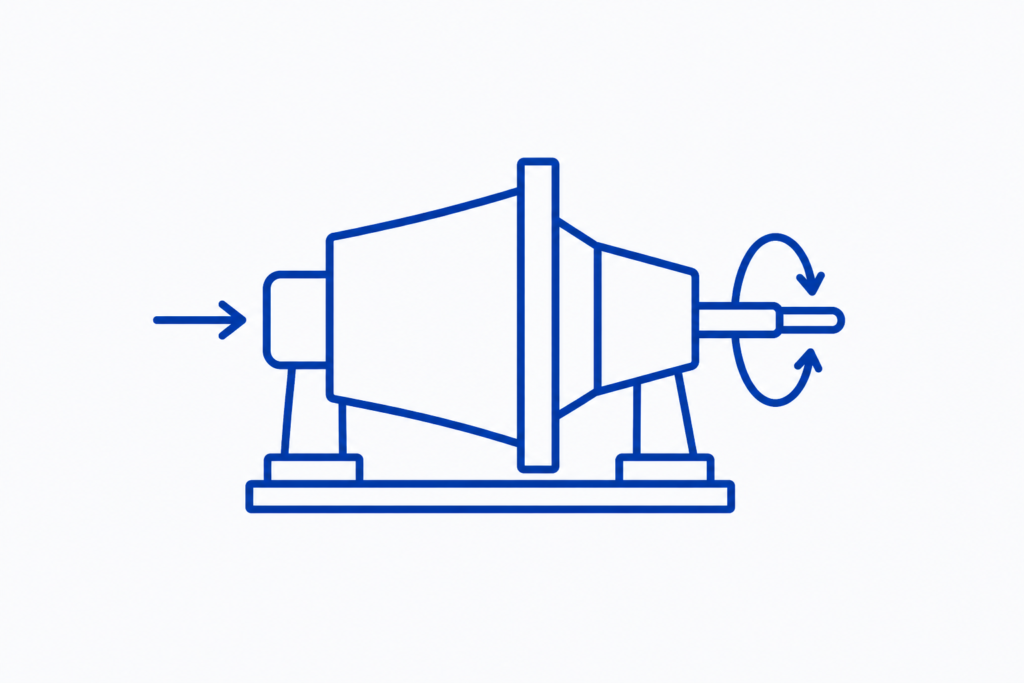
Expander Instability in Cryogenic Nitrogen Plants is a critical issue that directly impacts refrigeration balance and overall plant performance. The expansion turbine (expander) is one of the most important components in a cryogenic nitrogen plant, providing the refrigeration required to achieve and maintain cryogenic temperatures, enabling efficient separation of nitrogen from air.
In a properly operating plant, the expander maintains a stable balance between:
- Inlet flow and pressure
- Expansion ratio
- Refrigeration generation
- Cold box thermal conditions
This balance ensures that:
✔ The heat exchanger operates efficiently
✔ The distillation column receives stable feed conditions
✔ Nitrogen purity remains consistent
✔ Energy consumption is optimized
However, when Expander Instability in Cryogenic Nitrogen Plants occurs, this balance is disturbed.
Instability—commonly referred to as “hunting”—introduces rapid fluctuations in flow, pressure, and temperature. These fluctuations do not remain localized; they propagate across the plant, affecting:
- Cold box thermal profile
- Column separation efficiency
- Overall process stability
👉 As a result, Expander Instability in Cryogenic Nitrogen Plants is not just a mechanical issue—it is a system-level disturbance that can significantly degrade plant performance.
What Is Expander Instability in CryogenicNitrogen Plants?
Expander Instability in Cryogenic Nitrogen Plants, often called hunting, is a dynamic condition where the expander continuously oscillates instead of operating at a stable point.
It is typically characterized by:
- Rapid fluctuations in expander speed
- Oscillating inlet and outlet pressures
- Unstable flow through the turbine
- Continuous movement of control valves
- Irregular refrigeration output
👉 In simple terms, Expander Instability in Cryogenic Nitrogen Plants occurs when the expander is constantly overcorrecting and undercorrecting, never settling at a stable operating condition.
⚙️ Why Hunting Occurs
Expander Instability in Cryogenic Nitrogen Plants occurs when there is a mismatch between:
- Process demand (refrigeration required)
- Expander response (actual performance)
- Control system behavior (how corrections are applied)
If the system reacts too aggressively or too slowly, it creates a feedback loop:
- Parameter deviates
- Control system corrects
- Overcorrection occurs
- Opposite deviation appears
- Cycle repeats
👉 This results in continuous oscillation, which is the core behavior of Expander Instability in Cryogenic Nitrogen Plants.
Quick Engineering Summary
Expander instability in Cryogenic Nitrogen Plants disrupts refrigeration balance, causing temperature fluctuations and overall process instability.
Common Causes of Expander instability in Cryogenic Nitrogen Plants
1. Improper Flow Control
Flow control is critical for stable expander operation.
Issues include:
- Incorrect valve sizing
- Aggressive control valve tuning
- Sudden flow variations
Unstable flow directly causes fluctuations in expander load and speed.
2. Load Mismatch
The expander must operate within a specific load range.
If there is a mismatch between:
- Expander capacity
- Plant refrigeration demand
the system becomes unstable.
Example:
- Low plant load → expander overcapacity → oscillation
- High load → insufficient refrigeration → instability
3. Control Loop Issues
Control loops regulate expander behavior.
Poor tuning leads to:
- Overshoot (aggressive correction)
- Lag (slow response)
- Continuous oscillation
👉 This is one of the most common causes of hunting.
4. Air Flow Fluctuation
The expander depends on stable upstream air flow.
Variations caused by:
- Compressor instability
- Intake fluctuations
- Improper flow control
directly impact expander performance.
5. Temperature Imbalance in Cold Box
The expander is closely linked to the cold box.
Thermal imbalance can:
- Alter expansion efficiency
- Change refrigeration demand
- Destabilize expander operation
6. Mechanical or Operational Issues
Physical factors also contribute:
- Valve sticking
- Sensor inaccuracies
- Bearing wear
- Improper maintenance
Even small mechanical issues can amplify instability.
How To Detect Expander instability in Cryogenic Nitrogen Plants
Early detection prevents escalation.
🔍 Key Indicators
- Oscillating expander speed trends
- Fluctuating inlet and outlet pressures
- Sudden changes in temperature profiles
- Continuous control valve movement
- Irregular refrigeration performance
📊 Advanced Diagnostic Signs
🔸 Cyclic trends in DCS
Repeated patterns indicate hunting.
🔸 Fast parameter oscillation
High-frequency changes suggest control instability.
🔸 Correlated disturbances
Example:
- Expander speed ↑ → temperature ↓ → pressure oscillation
🔸 Increased operator intervention
Frequent manual adjustments indicate unstable control.
👉 A stable expander shows smooth, steady trends.
👉 An unstable expander shows continuous oscillations.
Facing expander instability in your plant?
Use the Stability Toolkit to systematically identify and control instability.
Impact of Expander Instability in Cryogenic Nitrogen Plants
Expander instability affects the entire plant.
🔻 Loss of Refrigeration Balance
Fluctuating expander performance disrupts cooling capacity.
🔻 Cold Box Temperature Instability
Temperature oscillations reduce heat exchanger efficiency.
🔻 Nitrogen Purity Instability
Unstable conditions affect column separation.
🔻 Increased Energy Consumption
The plant compensates for instability with higher power usage.
🔻 Mechanical Stress on Equipment
Continuous oscillations increase wear and reduce equipment life.
👉 Expander instability often becomes the trigger point for system-wide instability.
Key Engineering Insight
Expander behavior reflects upstream and downstream imbalance — not just turbine issues.
How to Control and Stabilize

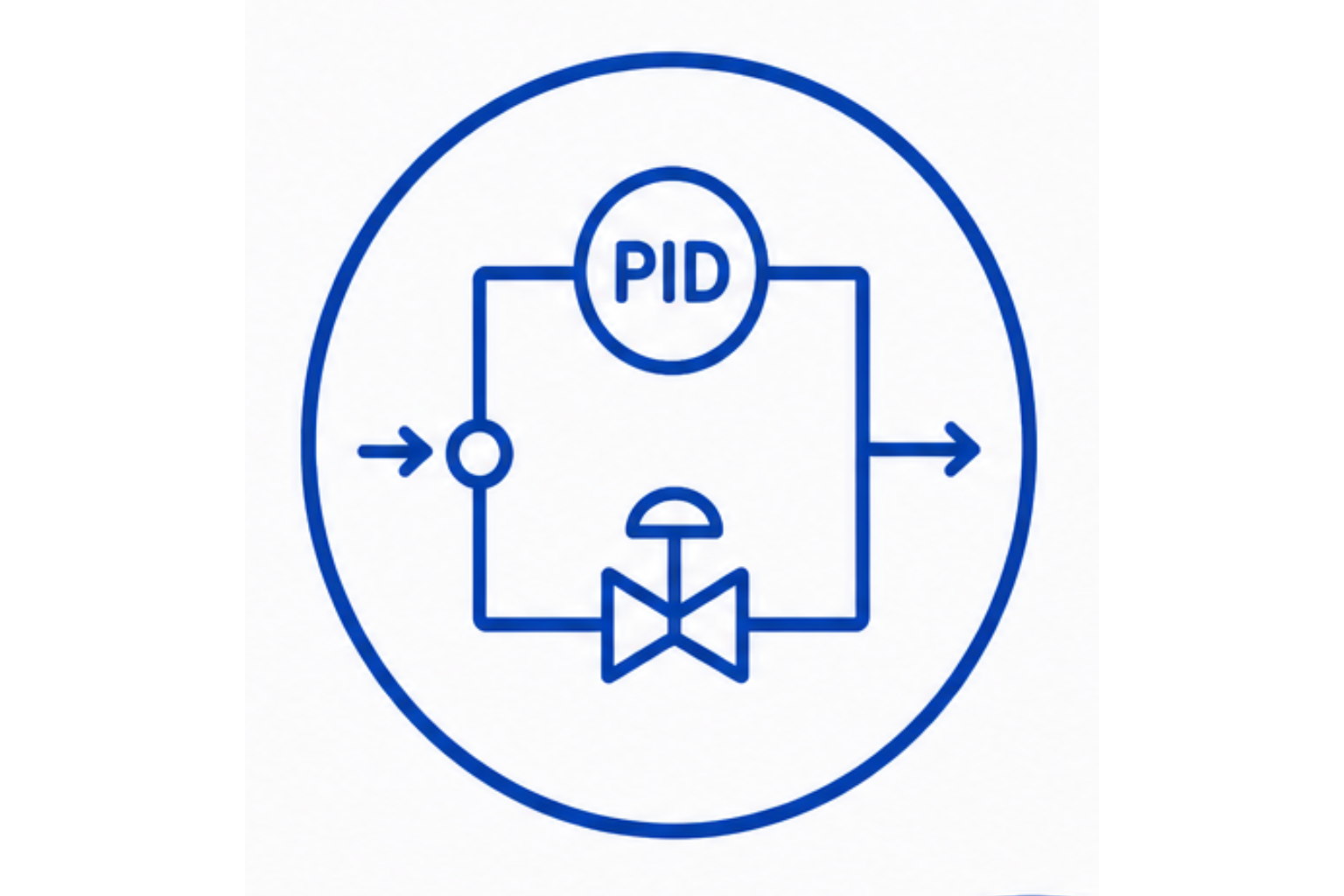
1. Optimize Control Loops
1. Tune PID parameters carefully
2. Avoid aggressive corrections
3. Ensure smooth response.
Stability depends on controlled response, not rapid reaction.
2. Maintain Stable Flow Conditions
1. Ensure consistent compressor performance 2. Avoid sudden load changes 3. Maintain steady feed conditions
3. Match Load and Capacity
Operate the expander within its optimal range:
1 Avoid overloading
2. Avoid underutilization
Proper load matching prevents oscillation.
4. Monitor Key Parameters
Track continuously: 1. Speed 2. Pressure 3. Temperature 4. Flow. Use trend analysis instead of snapshot values.
5. Eliminate External Disturbances
Identify and correct: 1. Upstream fluctuations 2. Air ingress 3. Thermal imbalance 4. Control inconsistencies
Struggling with expander hunting?
Apply a structured approach using the Stability Toolkit instead of trial-and-error adjustments.
Practical Engineering Insight
Always check compressor stability and flow conditions before adjusting expander controls.
Engineering Perspective
Expander Instability in Cryogenic Nitrogen Plants is rarely an isolated issue—it is a reflection of system imbalance.
The expander interacts with:
- Compressor (flow source)
- Purification system (feed quality)
- Heat exchanger (thermal balance)
- Distillation column (separation demand)
👉 A disturbance in any of these systems can trigger or worsen Expander Instability in Cryogenic Nitrogen Plants.
Stable expander operation requires:
✔ Balanced system operation
✔ Proper control strategy
✔ Stable upstream conditions
✔ Coordinated plant response
Engineers must move from:
❌ Reactive adjustments
➡️ Fixing oscillations
to:
✅ Proactive control
➡️ Preventing Expander Instability in Cryogenic Nitrogen Plants
Related Engineering Guides
To understand how proper startup and operation help prevent plant trips, refer to:
Step-by-Step Guide to Commissioning a Cryogenic Nitrogen Plant
Engineering Basis
This analysis is supported by established process control and thermodynamic principles:
- International Society of Automation – Control loop behavior, analyzer interaction, and process stability
- Process Control Engineering – System dynamics and feedback interactions
- National Institute of Standards and Technology – Gas property behavior under varying temperature and pressure
Conclusion & Key Takeaways
Stable expander operation is essential for maintaining thermal balance and overall plant stability. Expander Instability in Cryogenic Nitrogen Plants directly disrupts refrigeration balance, which in turn affects the cold box temperature profile, distillation column performance, and nitrogen purity. What may initially appear as a localized issue at the expander can quickly propagate across the entire plant, leading to system-wide instability and performance degradation.
Most cases of Expander Instability in Cryogenic Nitrogen Plants are not caused by a single fault but by a combination of factors such as control loop behavior, load mismatch, upstream fluctuations, and thermal imbalance. Addressing only the symptoms—such as adjusting valves or setpoints—may provide temporary relief but does not eliminate the root cause.
A structured, system-level approach is essential to achieve long-term stability.
🔑 Key Takeaways
✔ Maintain system balance
Expander stability depends on proper coordination between compressor flow, purification performance, cold box conditions, and column demand.
✔ Optimize control loop response
Well-tuned PID controllers prevent oscillations and ensure smooth, stable expander operation.
✔ Avoid rapid or frequent adjustments
Overcorrection leads to hunting. Allow the system to stabilize before making further changes.
✔ Monitor trends, not just instant values
Continuous trend analysis helps identify early signs of Expander Instability in Cryogenic Nitrogen Plants before they escalate.
✔ Control upstream disturbances
Stable compressor performance and consistent feed conditions are critical for maintaining expander stability.
✔ Adopt proactive stability control
Preventing instability is more effective than reacting to oscillations after they occur.
🚀 Final Engineering Insight
Expander Instability in Cryogenic Nitrogen Plants is not just an operational nuisance—it is a key indicator of system imbalance. Engineers who focus on root cause identification, coordinated control, and disciplined operation can eliminate instability, maintain consistent refrigeration, and ensure reliable long-term plant performance.
Stabilize Your Plant Operation
Eliminate expander instability and maintain consistent refrigeration and plant performance.
